
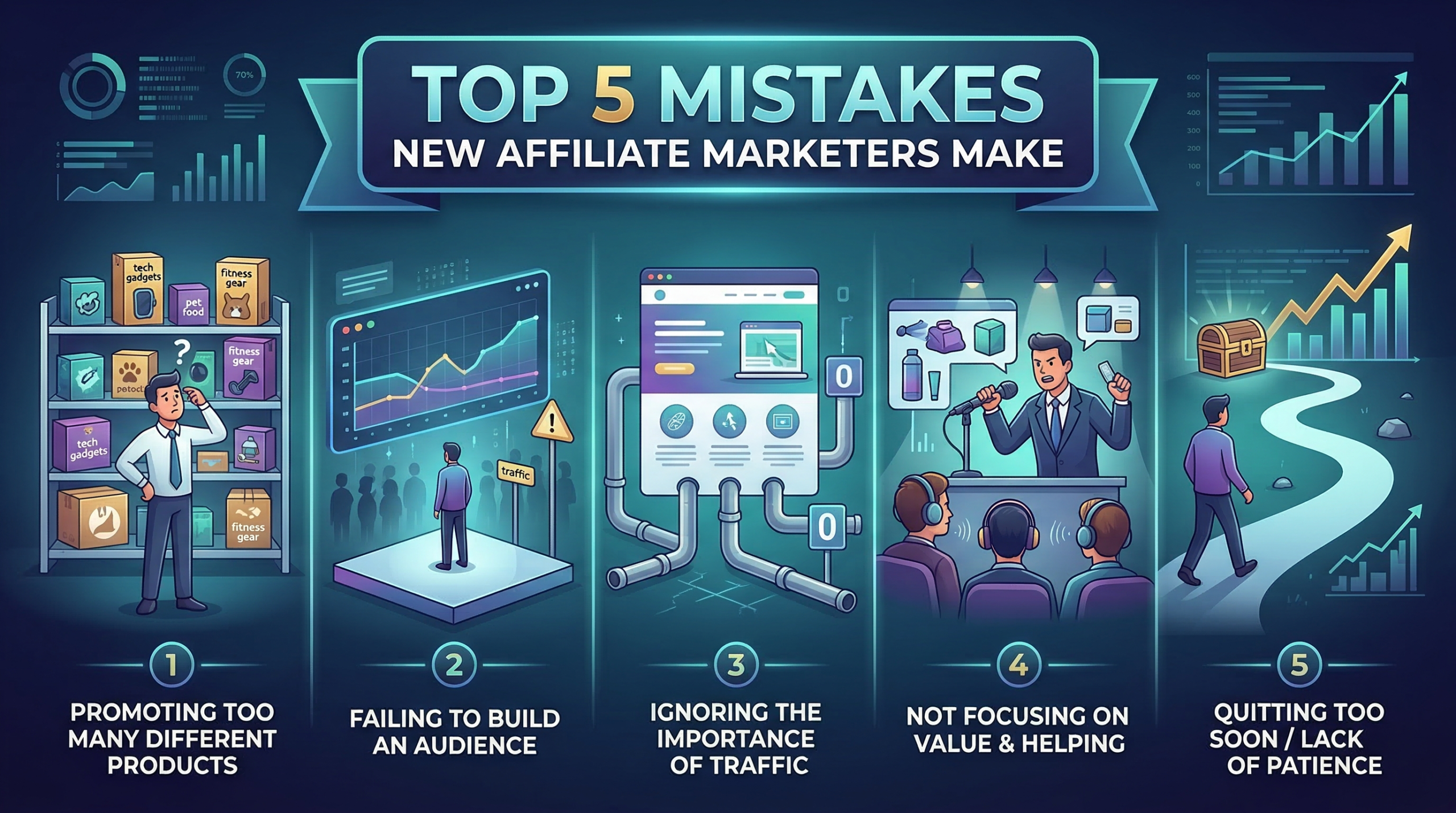

Are you new to affiliate marketing? Want to avoid common mistakes? Let’s look at Top 5 Mistakes New Affiliate Marketers Make. A lot of people get excited about making money with affiliate marketing, and honestly, I get the hype. The idea of earning from your laptop and working your own hours feels pretty appealing. But here’s the thing. Most beginners run into mistakes that make their adventure tougher than it needs to be. It’s not always clear what’s going wrong, so we’ll be breaking down the most common slip ups we see from people just getting started.
If affiliate marketing feels totally overwhelming right now, you’re in good company. There’s a lot to learn at first. Building a website, picking products, understanding SEO, and promoting links. It took me a while to see the potholes new affiliates stumble into. Once you know what these mistakes are, though, you can sidestep them and give yourself a much better chance at long term success.
Here are the top five mistakes I see new affiliate marketers make, along with some helpful advice to keep you on the right track from day one. I’ll also share how a solid training platform like Wealthy Affiliate can help you avoid these problems and get set up for real progress.

Top 5 Mistakes New Affiliate Marketers Make
1. Chasing Quick Wins and Unrealistic Promises
Here’s something a lot of people hope for. Making loads of money almost overnight with some “secret” affiliate formula. There’s no shortage of YouTube videos and social media stories promising easy money. I fell into this trap early on, and I can tell you it just leads to frustration.
Affiliate marketing works, but it’s not a get rich quick thing. It takes time to build a website, attract visitors, and learn what works for your audience. Jumping on every shiny object, like expensive courses or push button software, only sets you back. These shortcuts usually don’t deliver on the hype.
What Works Instead:
- Choose a niche that you actually care about, not just one that seems profitable.
- Be ready to put in consistent work over 3 to 6 months (or longer) before expecting a payout.
- Rely on genuine strategies, like honest reviews, helpful blog posts, and ethical promotion.
Platforms like Wealthy Affiliate provide step by step training so you can avoid the pie in the sky thinking and learn what actually gets results.
2. Not Focusing on a Specific Niche
This one gets a lot of beginners. Trying to target everybody or promoting random products without a clear focus just spreads your efforts thin. I see a ton of people set up websites covering five or six different topics, thinking more means better chances to earn. In reality, it just confuses visitors and search engines.
When your blog covers camping gear, baby toys, and beauty products all at once, it’s tough to build trust or be seen as an authority. Your content ends up shallow, and you’re competing with bigger, more focused sites in every direction.
How to Pick a Niche:
- Write down your own hobbies, problems you’ve solved, or industries where you already know a bit.
- Check if there are affiliate programs and enough interested people around those topics.
- Go deep instead of wide. Focus all your energy on one audience so your advice actually helps.
Wealthy Affiliate offers tools and community feedback to help narrow down a niche, which can be really useful if you’re stuck at the brainstorming stage. Picking a niche you truly care about keeps you motivated, even when it feels slow going. Your enthusiasm comes through in your content, making it easier to connect with your target readers.
3. Skipping Over SEO and Content Fundamentals
A lot of new affiliates jump right into setting up links and worrying about commissions, but skip learning basic SEO. If your website doesn’t get traffic, those affiliate links won’t do anything. I get it. Terms like “keyword research” or “on page optimization” sound complicated at first, but they’re not as scary as they seem.
The biggest hurdle is writing blog posts without any structure, and hoping they’ll magically go viral. Without knowing what people are searching for or how to lay out your content, your site won’t get found. That’s just the harsh reality that we want to avoid.
What You Should Be Doing:
- Learn how to use free tools to find keyword ideas related to your niche.
- Create articles or reviews that answer real questions, using those keywords naturally.
- Make sure your posts are easy to read, include internal links, and have helpful images or charts and tables if possible.
Even if SEO sounds technical, resources like Wealthy Affiliate break it down step by step. They show you exactly how to find keywords, structure posts, and start bringing in organic traffic, so you’re not left guessing what works.
4. Overloading Pages with Affiliate Links
This one feels sneaky because it seems logical. More links, more clicks, more money, right? Actually, dropping too many affiliate links into every paragraph just turns visitors off. It can even hurt your search rankings if the page looks spammy, or if you’re not making it clear when a link is an affiliate link.
I messed this up at first, thinking quantity was everything. What works way better is helping your audience, offering real value, and using affiliate links in just the right places. For example, you could recommend a product you personally like, or show how something solves a specific problem.
How to Use Affiliate Links More Effectively:
- Place links where they make sense and feel natural within your content.
- Always disclose when a link is an affiliate one, either with a statement at the beginning or right where the link appears.
- Mix in helpful content and not just promotions. Think tutorials, tips, and personal experiences.
- What Is Affiliate Marketing In 2026?
This ratio of value versus promotion creates trust and leads to more conversions over time. If you need help writing these pages without sounding like a walking billboard, Wealthy Affiliate’s training and templates are worth checking out. Remember, trust is everything in affiliate marketing. Earning your readers’ trust should always come before chasing commissions.
5. Giving Up Too Early (and Not Tracking Progress)
This is probably the biggest reason people don’t succeed. Affiliate marketing takes time, and it’s easy to lose motivation if you don’t see money rolling in right away. I nearly quit before I made my first sale. It’s a normal part of the process! What kept me going was seeing small signs of progress, like my website rankings improving or my audience growing, and my blog posts being indexed by search engines.
Another mistake is not tracking what’s working. If you’re not checking your analytics or paying attention to click through rates, you’re flying blind. It’s the best way to keep spinning your wheels without understanding why.
Tools and Habits That Help You Keep Going:
- Use free analytics tools like Google Search Console or the built in stats from your website host to check traffic and rankings.
- Write down small wins each week, even if it’s just publishing another article or getting a comment from a reader. Engagement is one of the most under rated aspects.
- Stay connected with an active affiliate marketing community for support, accountability, and new ideas.
This is where Wealthy Affiliate’s active forum and live chats really shine. The sense of community and ongoing motivation can make the difference when things get slow. Sticking it out past the early rough patches almost always leads to something worthwhile.
Bonus: Not Building an Email List Early
I didn’t realize how powerful email lists were until later in my adventure. When visitors land on your website, most leave and never come back, unless you have a way to keep the conversation going. Email lets you share tips, build trust, and recommend affiliate offers directly, without relying just on Google or social media traffic.
- Add a simple sign up form offering a free checklist or guide.
- Send helpful, not spammy, emails each week.
- Mix in product recommendations where it makes sense, focusing on products that are actually useful to your readers.
Your audience is more likely to trust your recommendations over time, which means better conversion rates. Even as a beginner, you can set up basic email marketing with plenty of free or budget friendly tools. As you grow, this list becomes a valuable asset that supports your affiliate income regardless of changes in search engine algorithms or social media trends.
Many beginners pick niches based on trends instead of long term interest or demand, which leads to burnout and lack of consistency.
Affiliate marketing requires time to build traffic and trust. Unrealistic expectations cause many people to quit too early.
Without proper keyword targeting and content structure, your website will struggle to attract organic traffic.
Pushing products without providing value reduces credibility and lowers conversion rates significantly.
Sporadic content creation and lack of routine prevent momentum and long term growth.
Q & A: Common Questions New Affiliate Marketers Ask
Q1. How long does it take to start making money with affiliate marketing?
Most beginners take a few months before they see their first commission. The timeline depends on your niche, how much work you put in, and how well you’re learning as you go. Platforms with step by step guidance, can shorten the trial and error phase, but patience is super important. Staying consistent and focusing on small improvements helps hugely in the long run.
Q2. Can I do affiliate marketing without a website?
You can technically promote affiliate links on social media, but having a website gives you more control, more credibility, and better odds at long term results. A website is your hub for building an audience, posting reviews, and getting traffic from search engines. Even simple blogs can be very effective for beginners.
Q3. What is the best niche to choose?
There’s no one size fits all answer here. The best niche is usually a topic you know about or care about, with enough people searching for advice or product reviews. Avoid jumping into a niche just because you heard it’s profitable. Use keyword tools and community input to help narrow down your options, and double check that there are affiliate programs available for the products or services you want to cover.
Q4. How many affiliate programs should I join?
It’s better to start with just one or two programs, learn the ropes, and build trust before adding others. Too many programs at once can get overwhelming. Focus on creating valuable content first, then branch out as you grow more confident. As your site grows, you can add more product recommendations gradually.
Q5. Do I need to pay money to get started?
You can start building a website and learning basic affiliate marketing with very little up front investment. There are free trials, beginner friendly website hosts, and tons of free tutorials. Paying for advanced tools or premium training only makes sense once you understand the basics and see some growth. Being frugal at first helps you focus on learning rather than spending.
Q6. How do I get traffic to my affiliate website?
Focus on learning SEO and writing helpful content. That means understanding what people are searching for and creating content that answers their questions. Share your articles on social media, join forums related to your niche, and add value wherever you can. Traffic starts slow but builds over time. Training communities like Wealthy Affiliate walk you through these steps so you’re not guessing, and you can learn from other people’s successes and mistakes too.
Q7. Am I allowed to use any product for affiliate marketing?
You need to sign up for each affiliate program individually and get approved. Different programs have their own rules, commission rates, and terms of service, so always read the program’s guidelines before promoting anything. It’s a good idea to promote only what you trust and like. Staying honest helps keep your reputation solid with your readers. Only join affiliate programs that align with your business and your personal morals and outlook.
Q8. Is affiliate marketing right for me?
If you enjoy writing, have patience, and like the idea of building something long term, affiliate marketing can be a good fit. It’s not fast money, but it works for people who want flexibility and steady income down the road. Learning at your own pace is easier if you’re part of a training hub or community, where you can ask questions and get feedback. Having a support system makes a huge difference during tough moments. In fact, I would say it’s crucial for success to have community help and support.

Summary
Thankyou
Thankyou so much for reading this article on Top 5 Mistakes New Affiliate Marketers Make. I do hope that it has given you value and the inspiration to get cracking with your very own online business. Just think where you can be in a year from now! For some extra reading, these related articles below are interesting and informative.
If you have any questions, or need some help and advice, please drop me a message in the comments section below. I will reply to you as soon as possible.
All the best!
Eamon