

A warm welcome to Life Shift Pro. This review article is titled Shopify Overview: Still Worth It In 2026? If you’ve been anywhere near the world of ecommerce, chances are you’ve heard about Shopify. It’s built a huge reputation by helping everyone from first time business owners to established brands launch and manage online stores without needing to master the ins and outs of hosting, web security, or code. Today, Shopify stands at the top of the online ecommerce world, and its popularity only seems to be growing.
Here’s how things stand for Shopify as we move toward 2026. What do you really need to know if you’re thinking about building an online business or switching your current one over to the platform? That’s what we’re going to dig into below. Giving you a detailed look at how Shopify sets itself apart and what to watch out for if you decide to use it.
Platform Name: Shopify
Website: shopify.com
Monthly Price Range: Basic to Advanced plans, starting at around $39/month (with extra expenses for apps, themes, and some transaction fees)
Founders: Tobias Lütke, Daniel Wein and Scott Lake
Launched:2006
User Base: Over 2 million businesses globally
Overall User Rating: 4.5/5 based on aggregated reviews (2026)
Trust Pilot Rating: 4.3/5 (as of early 2026)
Ease of Use: 5/5
Support Quality: 4/5
Feature Set (Compared to Industry): 4.8/5
Scalability: 5/5
What Makes Shopify Tick?
The main thing Shopify gets right is removing just about every technical headache you’d run into with self hosted solutions. People with exactly zero coding knowledge can build modern, mobile ready stores in hours instead of weeks. The platform handles the tough work of maintenance, server updates, PCI security, SSL setup, and payment processing, making it pretty attractive even for serious ecommerce veterans who just want to focus on business. Shopify focuses on allowing entrepreneurs, small businesses, and growing brands to put their energy into what matters most. Their products and customers.
Quick Glance at Shopify’s Features
Below is a breakdown of Shopify’s key features in 2026 and why they matter for today’s business owners:
- Storefront Builder: Super flexible drag and drop visual editor. New themes come out yearly, all are set up to work smoothly on phones and desktops.
- Payments: Shopify has its own built-in system supported in most countries. You can also add other gateways, including PayPal, Stripe, and more specialized payment providers.
- App Marketplace: Over 8,000 apps available for everything from SMS marketing and email automation to dropshipping and analytics.
- Product and Order Management: Add unlimited products, manage inventory, sync SKUs across channels, and bulk edit easily using an intuitive dashboard.
- Multichannel Selling: Sell through your storefront, Facebook Shops, Instagram, Google, TikTok, and in person with Shopify POS, all in one place.
- SEO and Marketing: Built in tools cover meta tags, URL structure, redirects, and discounts. Also features marketing automations and blogging (not as in depth as WordPress, but solid for most stores).
- Analytics & Reporting: Real time tracking for revenue, inventory, and customer lifetime value. Advanced plans give you super detailed reports and insights.
Shopify isn’t just about launching a store. It’s about managing and growing it in an eco system that can keep pace as your business scales up. More than that, it keeps updating and adding new tools based on what online sellers are asking for, making sure you don’t fall behind popular online shopping trends.
Why Shopify Is Such a Big Deal
For a lot of folks, Shopify is basically the “Google” of online selling. The platform keeps attracting entrepreneurs and established companies because it takes away so much risk and time drain. As more people shop on their phones, this matters even more. Shopify sites work smoothly on any device without extra setup.
- Fast, Clear Setup: You can get a great looking shop live in an afternoon.
- Modern Look and Feel: Shopify’s themes look eye catching and can easily match your branding.
- Reliable Hosting: Server downtime and SSL headaches are things of the past here.
- Security Handled for You: PCI compliance and security patches are entirely taken care of. You don’t need to worry about them.
- Huge Library of Apps: Any new ecommerce trend, like BNPL (Buy Now Pay Later), influencer programs, WhatsApp chat support, can be added quickly with an app. No custom coding needed.
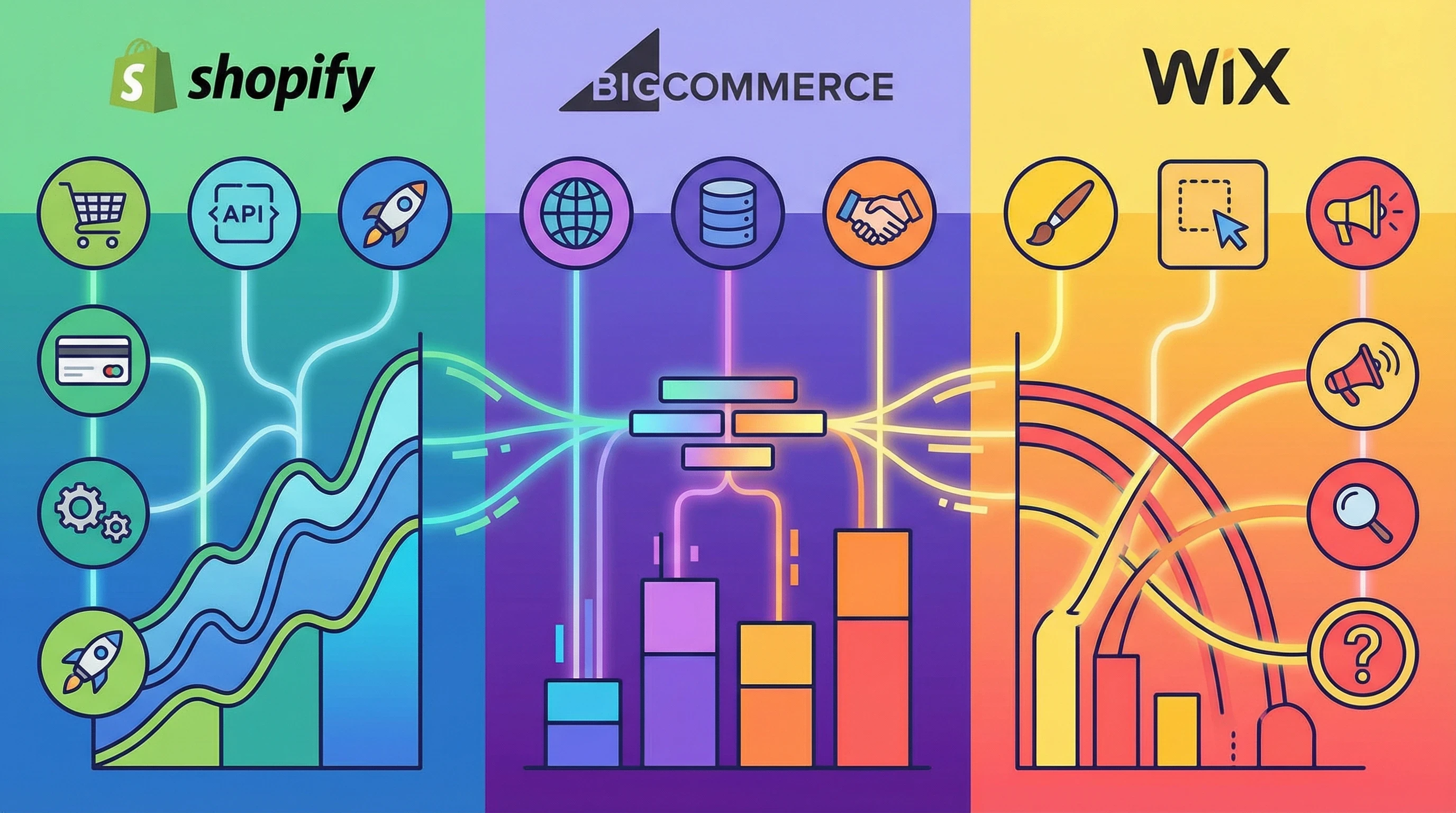
Its biggest competitor is WooCommerce (for those wanting maximum DIY flexibility and lower monthly spending), and BigCommerce or Wix for folks who want a hosted solution without transaction fees. However, none of these platforms actually match Shopify’s enormous app marketplace or its seamless POS system for in person sales.
Inside Shopify: The Core Tools That Matter
Visual Store Builder
I really appreciate tools that don’t require an IT degree, and Shopify nails this area. Its drag and drop builder continually gets better every year, making it easier to customize your store just the way you want. Themes are easy to adjust. Choose colours, fonts, layouts, and use live previews before you make changes real. If you want even more control, you can get into the code, but you’re never forced to. For instance, I helped a friend set up a jewellery shop. She had zero experience but had her store up in two days. Shopify smooths the way for creative business ideas to become reality fast.
Payments and Checkout Experience
Customers immediately notice if checkout is clunky, slow, or doesn’t let them use their favourite payment method. Shopify Payments supports all major cards and wallet apps like Shop Pay, Apple Pay, and Google Pay. You can bring in PayPal and Amazon Pay, plus more third party gateways if you’re selling worldwide. Important note, using non Shopify payment systems means a small extra fee on each sale, so keep that in mind as you game plan your store’s payment options.
Order and Product Management
Inventory management is really straight forward. Add or import products quickly, tag items for simple searching, set up low inventory alerts, and even print shipping labels straight from your dashboard. Integrations with fulfilment apps like ShipStation or third party logistics providers only take a few clicks. This process used to take hours, now it’s maybe a few minutes.
Reporting, Analytics, and Business Insights
Another spot where Shopify shines is reporting. Some platforms make you hunt for simple stats or buy pricey add ons, but Shopify’s dashboards give you live traffic, conversion rates, and sales trends right away. If you’re using the higher tier plans, you also get reports you can export and inventory forecasting to help map out your next moves.
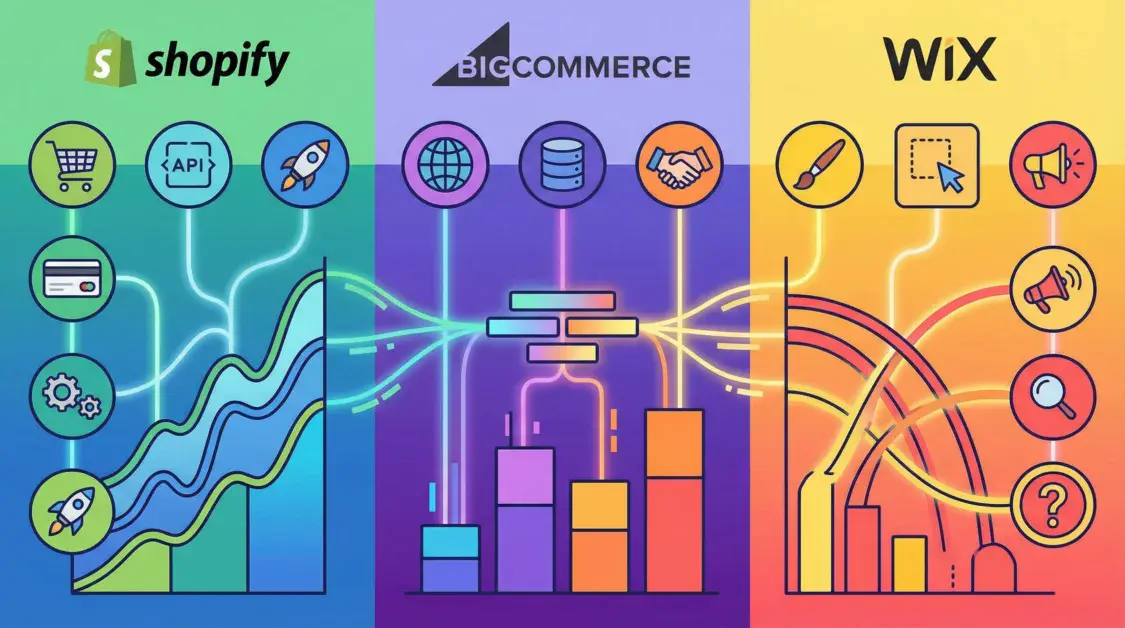
Shopify vs BigCommerce vs Wix
Multi Channel Selling
Shopify allows you to sync inventory and orders across your website, physical locations, and channels like Amazon, Facebook, TikTok, and Instagram. This is invaluable if you want to reach customers wherever they shop. I’ve tracked stores that saw their traffic and sales skyrocket just by adding social shopping connections, especially during busy holiday seasons.
The App Store Ecosystem
Shopify’s app marketplace is a major strength. Want email marketing, loyalty perks, automated shipping, or print on demand services? There’s an app for that and pretty much everything else. Remember, many are paid, and app costs do add up, so be strategic about which features you really need. The huge upside is that Shopify’s app scene means your store can quickly keep pace with ecommerce trends long before other platforms catch up.
What Does it Actually Cost to Use Shopify?
Shopify uses a straightforward subscription model. For 2026, plans start at about $39/month for Basic, $105/month for the regular Shopify plan, and $399/month for Advanced. If you’re running a bustling, high volume business, Shopify Plus offers custom rates and extra white glove features. As your business grows, you unlock better shipping rates and more advanced analytics.
- Monthly Subscription: Basic $39, Shopify $105, Advanced $399 (2026 rates)
- Domain registration: About $14/year if you buy through Shopify (optional, but streamlined)
- Premium Themes: One time cost, usually $150 to $400 per theme
- App Costs: Free options are available, but many top apps run $5 to $200+ monthly per app
- Transaction Fees: Zero if you use Shopify Payments, 0.5% to 2% if using other gateways
It’s important to keep an eye on add on expenses. Premium apps and themes improve your store, but lots of small charges can start to chip away at your profits, especially for new businesses on tight budgets.
Shopify Pros and Cons: My View
Top Reasons I Like Shopify
- Truly easy for beginners: Go from nothing to open in hours instead of weeks.
- Great support & documentation: Robust live chat, email, and active community forums. Help files and tutorials are kept fresh as trends change.
- Expansive App Store: Find nearly any tool or function you want to try. Usually just a click to install.
- Mobile ready themes: Out of the box, your site shines on phones and tablets.
- Fast, secure hosting: You never worry about traffic spikes or hacks shutting things down.
- Room to grow: Start with a side hustle, but if things take off, Shopify can keep up. No need to switch platforms.
Here’s What to Remember
- Not always the cheapest: Subscriptions plus apps can outpace rival platforms if you aren’t careful.
- Heavy on paid apps: You’ll need plugins for some basic features that feel like they should be included by default.
- Blogging options are limited: For deep content or magazine style publishing, WordPress is still tops.
- SEO is solid but not best in class: URL control and blog tools lag behind dedicated CMS platforms.
Third party payment fees: Don’t use Shopify Payments? Expect a small fee on outside gateways. That can begin to add up for large stores.
Who Is Shopify Best Suited To?
Shopify is best suited for anyone focused on selling physical or digital products. Even if that business is still just a part time side hustle. It really shines when you plan to grow over time and need support for multi channel sales or want everything “under one roof.”
People who benefit the most include:
- Product focused entrepreneurs
- Dropshipping ventures
- Print on demand brands
- Subscription box businesses
- Anyone wanting a professional store without hiring coders
If you’re aiming for a magazine, content heavy website, or want to make most of your revenue from affiliate marketing, Shopify isn’t ideal. It’s built first and foremost for ecommerce. Not advanced blogging or content first models. In those cases, platforms like WordPress or even Ghost might fit better. Shopify’s design choices make it awesome for product selling, but a bit limiting for pure content creators.
How Does Shopify Stack Up Against the Competition?
Comparing Shopify to BigCommerce
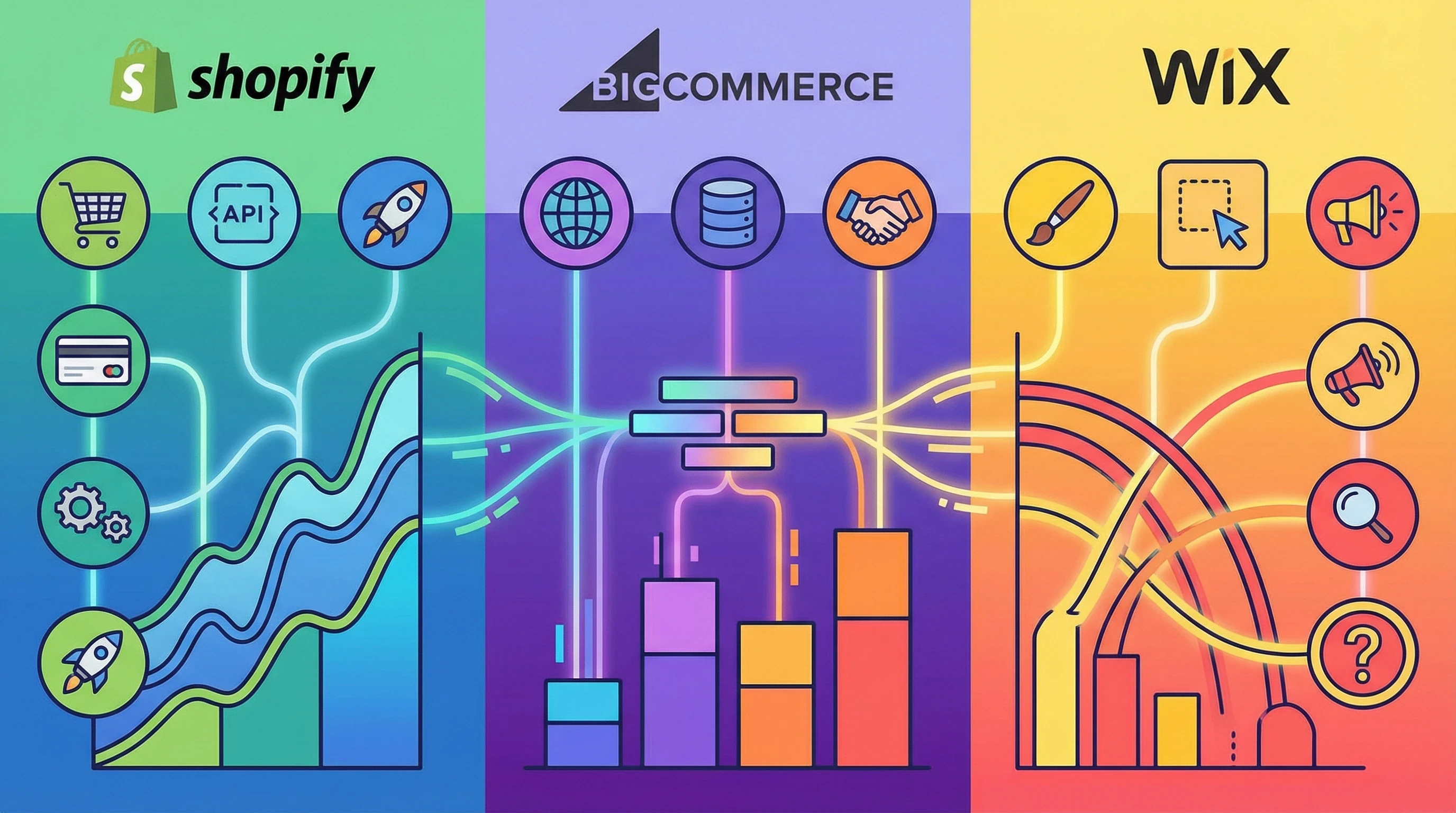
BigCommerce runs neck and neck with Shopify in a lot of feature comparisons. They both offer visual builders, multichannel options, loads of integrations, and top notch performance. BigCommerce stands out by skipping extra fees on outside payment gateways, appealing to businesses needing payment variety. But Shopify’s larger app marketplace, worldwide support, and in person POS hardware often seal the deal for stores planning to grow and mix in variety between sales channels.
Shopify vs. Wix Stores
Wix offers a super friendly, design rich builder, and its customization options are almost endless. For businesses that want total creative control or prioritize a beautiful static website, Wix excels. However, for ecommerce, Wix really targets smaller stores and part timers. Shopify, on the other hand, brings pro level reporting, POS, wholesaling, and native cross channel selling to the table. Making it the better choice for brands with big plans or aiming for the next stage. Shopify’s security and performance also handle spikes and heavy peaks better when your sales ramp up.
Real Talk and Honest Comparisons
There are plenty of success stories on platforms like Squarespace or WooCommerce, especially for those on tight budgets or with a heavy content focus. But in my experience, for most businesses selling products online, Shopify’s combination of ease of use, real support, room to grow, and nearly endless integrations make it the top pick as we look into 2026 and beyond.
Income and Profit Potential with Shopify
Many ask if Shopify guarantees a successful business or passive income stream. My answer, Shopify is a powerful set of tools, not a magic shortcut. Your success completely depends on your business idea, marketing, customer support, and how well you manage costs and pricing. Some brands hit seven figures. Others take time to get their first handful of sales. There’s no one size fits all magic. Just hard work, smart planning, and steady learning.
Stores can see overnight growth if a social post takes off, but most require steady effort, consistent marketing, building an email list, gaining traffic through SEO or social channels. Shopify gives you the sturdy platform and helpful features to manage all this, but your hustle is what brings results in the long run.
Shopify Pros And Cons
Advantages
- Beginner friendly setup
- Secure hosting included
- Scalable for growing brands
- Large app ecosystem
- Professional checkout system
- Multi channel selling capability
- Reliable infrastructure
Disadvantages
- Ongoing monthly subscription cost
- App expenses can increase quickly
- Transaction fees without built in payments
- Limited blogging functionality
- Competitive ecommerce landscape
- Customization limits without coding
Frequently Asked Questions: Shopify in 2026
Q1. Is Shopify worth it for beginners in 2026, or is it too complicated or expensive?
Shopify remains one of the easiest ways for beginners to launch an online business. The clean interface, guided setup steps, and excellent support really matter if you’re learning as you go. The monthly fee is an investment, but compared to the free tools that often require lots of hidden setup and troubleshooting, Shopify’s time and headache savings are worth the price for anyone serious about selling online.
Q2. Does Shopify work for digital products or only physical goods?
You’re able to sell all types of goods. Shopify natively supports digital downloads, event registrations, subscriptions, and more. There are also apps available for things like licenses, pay walled content, or courses. If your business never touches physical inventory, Shopify can still be a strong platform.
Q3. What ongoing costs should I expect with Shopify?
Expect to pay your monthly plan, app/plugin charges as you add features, a one time or occasional fee for certain themes or transaction fees if you process payments outside of Shopify Payments. Domain name renewals are annual and generally pretty affordable. If you use paid advertising or email tools, budget for those too. Your overall spend will go up as your business and needs grow, but so should your revenue if you’re scaling things the right way.
Q4. Is my online store secure on Shopify?
Yes, Shopify takes care of PCI compliance and SSL certificates, and consistently keeps the platform up to date with security patches. Automated backups and fraud checks are included, too. As long as you use strong passwords and basic security habits, your business data is kept safe behind industry-standard protections.
Q5. Can I switch my store from Shopify to another platform later?
You’re not locked in if you start with Shopify. Products, customer lists, and orders can be exported easily. Some site content or layouts may need manual tweaks if you move, but overall, migration is smoother than on many legacy platforms. Most users stay on Shopify thanks to how smoothly it scales, but if your focus or needs change, you won’t be trapped.
Q6. How is Shopify’s customer support and community in 2026?
Shopify has maintained great support, offering chat, phone, and email help. The help centre is packed with step by step guides, and community discussions are lively and informative. Support response can vary with your plan and time zone, but in my experience, help is fast and knowledgeable when you need it.
Q7. Can you really build a full time income or a big brand on Shopify?
Absolutely, if your product is in demand and you stay on top of marketing. Shopify powers everything from solo run shops to household name brands, especially on the Plus plan with custom options. Your actual success always comes down to your idea, your audience, and your dedication, but Shopify gives you the structure and scale you need to go the distance.
Q8. Is Shopify a good fit if I want to focus on content marketing or affiliate income?
Shopify is designed for selling, not for content-first or affiliate heavy businesses. You can use the blog function for light content, but options are basic compared to platforms aimed at publishers. If your dream is a content site or review mag, go for WordPress, Ghost, or another dedicated CMS. But for direct sales, especially with side by side multi channel and big growth potential, Shopify leads the pack.
My Takeaway on Shopify (2026 Edition)
Shopify stands out as one of the top ecommerce platforms for a reason. It smooths out the tech headaches, helps you get selling fast, and keeps up as your sales and traffic grow. Whether you’re a first time business owner, dropshipping, selling digital goodies, or building a massive brand, Shopify makes it easy to start and has the muscle for bigger ambitions. Costs do rise as you add features, but for most, the value and time saved outweigh the spend.
Where Shopify really shows off is in its all in one store management, app integrations, robust security, and flexibility to stay ahead of new shopping trends. If you aim to run a sustainable business selling products, Shopify remains a smart pick for 2026 and beyond. For pure content creators and affiliate marketers, you’ll want a platform dedicated to those needs. For those with products to sell, though, Shopify keeps setting the bar high as ecommerce keeps growing.
Many thanks for reading this review article Shopify Overview: Still Worth It In 2026? I hope that the information provided has given you value and the confidence in Shopify to put your business trust in them going forwards. For some further reading, take a look at these interesting, related articles:
All the best!
Eamon


What a thorough and honest Shopify overview, Eamon! As someone who’s been researching the best ecommerce platforms for starting an online business in 2026, this was exactly the balanced breakdown I needed. I especially appreciated that you didn’t just focus on the positives — pointing out that app costs can stack up quickly is something a lot of Shopify reviews gloss over.
Many thanks for your comments. Much appreciated.