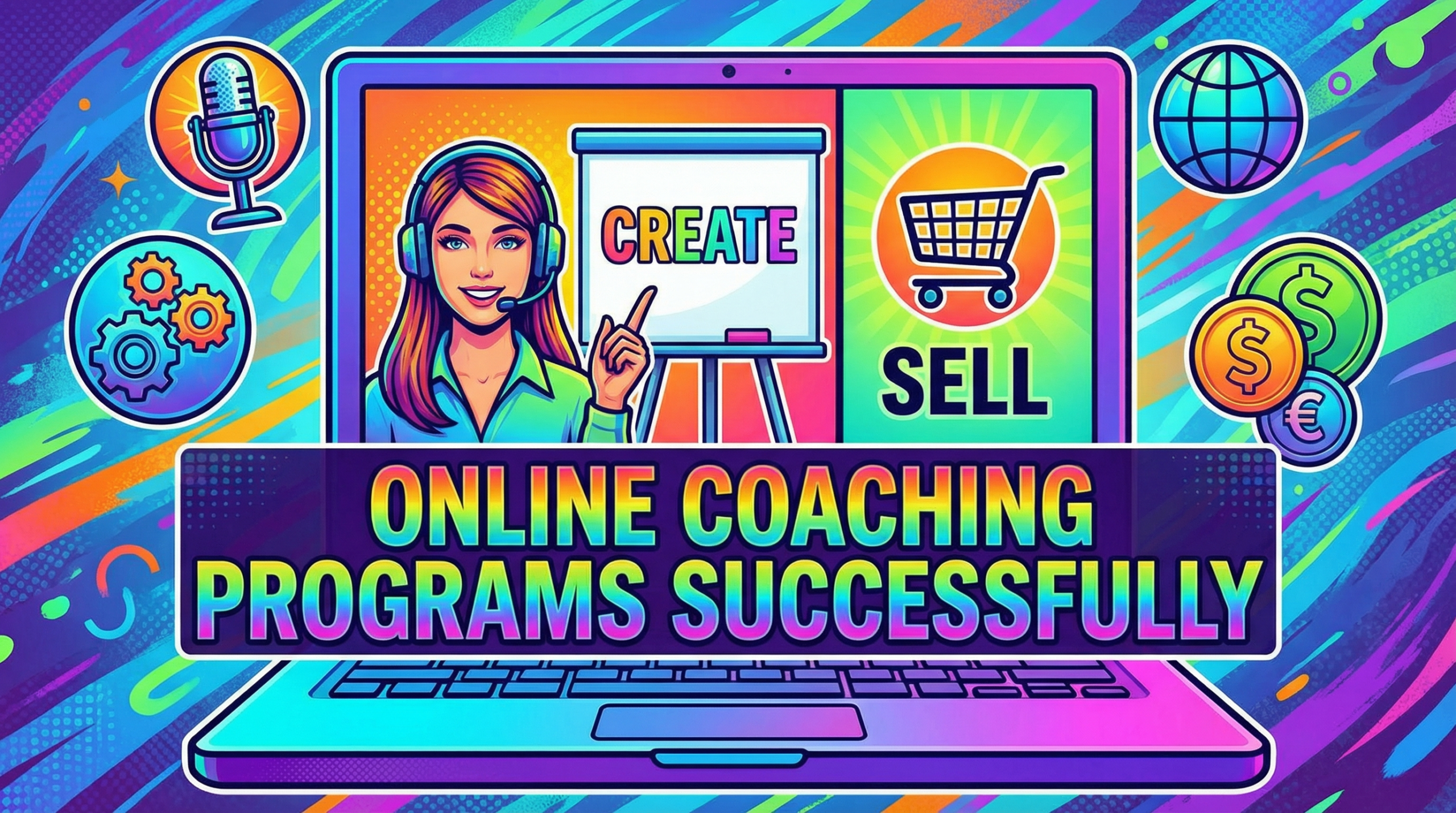

Our article title today is How To Create And Sell Online Coaching Programs Successfully. Building and selling online coaching programs has opened up brand new ways for people to share their expertise and help others. I’ve seen folks from all walks of life take their knowledge online, reach an audience, and earn a living, even if they started from scratch.
If you’re thinking about joining this field, just know that you don’t need to have a massive following or a degree from a top university. The internet has levelled the playing field and now anyone with a proven approach or unique insights can launch a coaching program.
If you want to make a real impact, a generic webinar series or PDF isn’t enough. Learners are looking for connection, structure, and results, and that’s where a well designed coaching program stands out. Done right, these programs let you scale your impact and income without burning out on one to one calls all day. With the right plan, you can serve more people, build a real community, and have the freedom to work on your own terms.
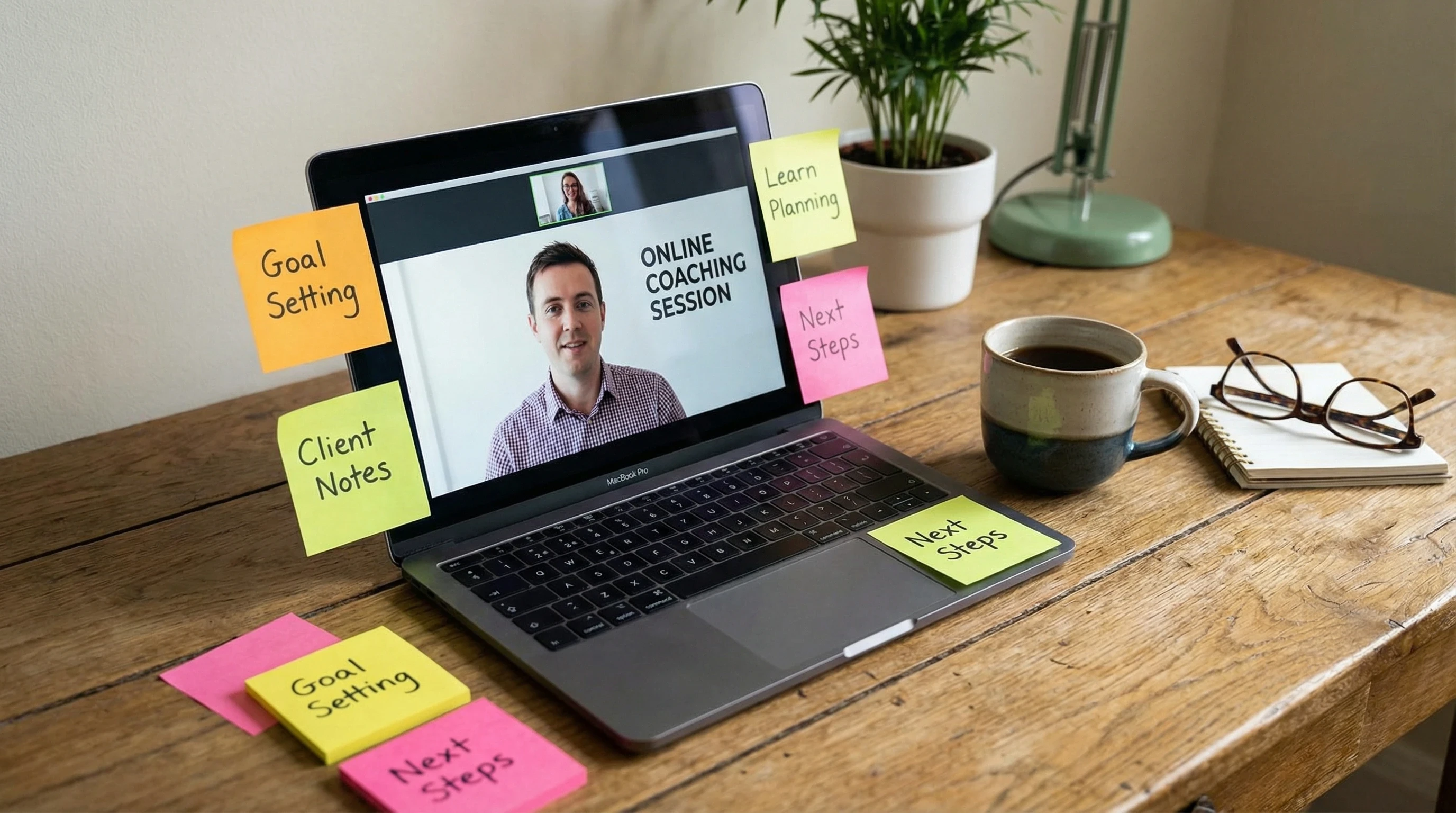
I’ve helped create coaching programs myself, and worked with others doing the same. In this guide, I’m breaking down everything that really matters, from picking the right topic to getting your first paying clients. If you want a practical plan to build and sell your own online coaching program, you’re in the right place. Let’s jump right into the process and cover each step you’ll want to focus on to launch something successful and lasting.
Online Coaching Revenue Potential Breakdown
Starter Coaching Model
Price Per Client: $100 to $300
Clients Per Month: 5 to 10
Monthly Revenue Potential: $500 to $3,000
Best For: Beginners building experience
Group Coaching Model
Price Per Client: $500 to $1,500
Clients Per Month: 10 to 20
Monthly Revenue Potential: $5,000 to $30,000
Best For: Coaches ready to scale
High Ticket One To One Coaching
Price Per Client: $2,000 to $10,000+
Clients Per Month: 3 to 8
Monthly Revenue Potential: $6,000 to $80,000+
Best For: Established experts
Hybrid Coaching And Course Model
Price Per Client: $997 to $3,000
Clients Per Month: 20 to 100+
Monthly Revenue Potential: $20,000 to $100,000+
Best For: Coaches building scalable brands
How To Create And Sell Online Coaching Programs Successfully
Step 1: Pick The Right Coaching Topic
Choosing what to coach on is the foundation. A topic that’s too broad or too trendy can make it tough to stand out or target the right people. You want to pick an area that reflects your own skills and where you can deliver results. It should be something you enjoy talking about and have experience in. There’s nothing more motivating than genuinely helping someone make progress in a field you care about.
Questions To Help You Choose:
- What do people already ask me for advice about?
- What results have I achieved that others want?
- Which experiences do I have that are unique or uncommon?
- Is there an audience for this topic willing to pay for coaching?
- What challenges do people in this area keep facing, and where do they get stuck?
Popular Coaching Niches:
- Career changes or job interview prep
- Wellness or fitness transformation
- Parenting and family life
- Creative skills and entrepreneurship
- Marketing, branding, or sales strategies
- Personal productivity and goal setting
- Financial planning and money mindset
I’ve noticed that coaches who choose a specific topic and audience are able to build stronger programs and market them much easier. It’s a lot less stressful than trying to be everything for everyone. The narrower your focus, the easier it is to build a loyal client base that sees you as their go to expert.
Step 2: Design A Coaching Program That Delivers Results
Anyone can put together a set of slides or jump into a Zoom call. What really helps clients, though, are programs with a clear structure, measurable outcomes, and regular interaction. Coaching is more than just dispensing advice. It’s about helping people get over real hurdles, step by step, and giving them the support they need to see things through.
Basic Structure Of A Successful Coaching Program:
- Step by step framework or roadmap
- Live coaching sessions (group or one on one)
- Assignments or practice activities
- Supporting materials (templates, checklists, videos)
- Ways to track and celebrate progress
Tips From My Own Programs:
- Break your material into focused modules, each with its own goal.
- Keep sessions interactive. Q&A, hot seats, or workshops make people feel involved.
- Offer some kind of accountability, like a weekly check in or success tracker.
- Make resources easy to access and reference. Avoid overwhelming clients with information dumps.
- Have clear, actionable steps after each session to give people momentum.
Clients stay motivated when they know exactly what to do next. If you make it simple to follow through, you’re already ahead of most other coaches. Results come from consistent action, and your job is to smooth the path and remove roadblocks along the way.
Step 3: Choose The Best Delivery Platform
Just a few years ago, online coaching meant endless email chains and awkward video calls. Today, there are a bunch of platforms made just for this, making it easy to run and deliver your programs. A good platform saves you tons of admin time, helps you look professional, and makes life easier for your clients.
Popular Coaching Platforms:
- All in one course platforms (like Teachable or Thinkific)
- Specialised coaching tools with scheduling, payments, and video built right in
- Private membership groups on WhatsApp Communities, Discord, or Facebook
- Video conferencing tools for live sessions (Zoom is still popular for a reason)
What matters is finding a system that handles your main tasks. Managing client access, sharing resources, scheduling, and possibly taking payments safely. I suggest trying out a free trial or demo before locking one in. A user friendly platform makes the whole client experience smoother, not just for them, but for you too. Look for features that match your coaching style, like group chat, reminders, or built in homework trackers.
Step 4: Set Your Pricing And Package Options
Pricing makes a lot of new coaches nervous. I hear from my own readers all the time that they’re worried about charging too much or too little. There’s no magic number, but there are some things I pay attention to when setting a price, because how you package and explain your offer influences the value clients see in it.
How I Approach Pricing:
- Think about the level of personal attention and support you’ll provide
- Check what other coaches in your niche are charging. Don’t just copy, but use it for context
- Decide on your session size. One to one, group, or hybrid
- Frame your pricing around the results and outcomes, not just time spent or the amount of content
- Factor in costs such as platform fees or marketing
Package Ideas:
- Single session intensives for a rapid breakthrough
- Multi week programs with organised calls and assignments
- Ongoing membership with regular group calls, community support, and extra resources
- VIP add ons for more private coaching time at a premium
When I first set up my coaching, I offered a mini program at a low rate to earn testimonials and refine my approach. As demand grew and I could show proven results, I felt confident raising my prices. Never forget, coaching is about guiding someone to a meaningful change in their life. That has more value than hours spent or the number of worksheets.
Step 5: Market Your Coaching Program Successfully
You can have the best coaching program on the planet, but if nobody knows about it, it won’t help anyone. Consistent marketing is how you fill your seats and get your first clients. Marketing doesn’t have to be complicated. Focus on telling your story, showing your real results, and building genuine connections. The online world is full of noise, but if you focus on being real and showing up consistently, you’ll cut through.
Marketing Techniques That I Found Effective:
- Share free tips and insights on social media to demonstrate your expertise and attract interest
- Host free webinars, challenges, or mini workshops to sample your teaching style
- Email marketing to your own list or by teaming up with partners who serve a similar audience
- Gather stories and testimonials from beta testers or early clients and use those in your outreach
- Create a lead magnet (like a checklist or short guide) to help grow your email list
What Makes Someone Decide To Sign Up?
- They see you as relatable and trustworthy
- You speak directly to the challenges they want to solve
- You provide a clear path from where they are now to the outcome they want
- There’s proof from others who’ve gone through the process and succeeded
I found that keeping the sales process friendly and personal got better results than trying to use pressure tactics or hype. Clients sign up because they believe in your promise and can see themselves achieving the outcome you describe.
Step 6: Onboard Clients For A Great Experience
Starting your clients off strong is essential. A smooth onboarding experience shows you’re professional, organised, and invested in their success. It reduces confusion and builds trust from day one. Make this process easy for both you and your clients, and you’ll see improved satisfaction and retention.
Smooth Onboarding Checklist:
- Send a welcome email with clear details about expectations, session times, and how to access resources
- Provide a guided introduction, such as a kickoff call or easy orientation video
- Have a quick intake form to get information on their goals, background, and unique preferences
- Give a simple, specific first action step to help build momentum from the start
- Offer a way for clients to reach out for support or questions to remove barriers
Every time I streamlined this onboarding process, clients felt more confident and engaged, which led to fewer issues later on. Small touches like a personalised welcome video or a quick message on day one show you truly care.
Step 7: Gather Feedback And Improve Your Program
No matter how much you plan ahead or how many test runs you do, honest feedback from real clients is what helps you step up your program. I make it a habit to check in regularly, not just when something goes wrong or at the very end. Small improvements along the way show clients that you listen, and that leads to even better experiences for both new and returning clients.
Easy Ways To Collect Feedback:
- Quick pulse surveys after each module or milestone
- Open up the floor in your coaching calls for thoughts and questions
- Send follow up emails to track ongoing progress and ask what worked best
- Ask for honest feedback in a way that makes clients comfortable sharing the good and the bad
- Act on suggestions quickly, showing you care makes a big difference
Your program will naturally improve over time. When clients see you making real changes based on their words, they stick around longer and are more likely to send referrals your way. Future clients will notice these details too, as your reviews and testimonials grow.
How To Create And Sell Online Coaching Programs Successfully
1. Define Your Niche
Focus: Choose a specific audience and clear problem you solve.
Why It Matters: Specific offers convert better and attract ideal clients.
2. Create A Structured Program
Focus: Break your coaching into modules or milestones.
Why It Matters: Clear transformation paths increase perceived value.
3. Choose Your Delivery Method
Options: Live calls, recorded lessons, group coaching, or hybrid models.
Why It Matters: The format affects scalability and pricing.
4. Price For Value
Strategy: Price based on transformation, not time.
Why It Matters: Higher value positioning attracts committed clients.
5. Build Authority Content
Focus: Publish blogs, videos, or social content demonstrating expertise.
Why It Matters: Trust is essential before someone invests in coaching.
6. Create A Sales Funnel
Tools: Landing pages, email sequences, discovery calls.
Why It Matters: A structured funnel increases conversions consistently.
7. Collect Testimonials
Focus: Showcase real client transformations.
Why It Matters: Social proof dramatically improves sales.
8. Scale With Systems
Strategy: Automate onboarding, payments, and content delivery.
Why It Matters: Systems allow you to grow without burnout.
Common FAQs About Creating And Selling Online Coaching Programs
Q1. How much experience do I need to start coaching online?
You don’t need decades of experience to help others. If you’ve achieved a result others want and you can clearly teach your process, you’re ready. It’s about being a few steps ahead of your clients and willing to guide them with empathy and clarity.
Q2. Do I have to offer one on one coaching, or can I work with groups?
Both formats work really well. One on one is more personal and can command a higher price, but takes more of your time. Group coaching lets you reach more people in less time and helps clients learn from each other. Many coaches begin one to one, then launch group programs as demand increases and their systems improve.
Q3. What tools do I need to run my online coaching program?
You really just need a reliable video conferencing program, a way to send files or worksheets, something to schedule sessions or track progress, and a payment method (like PayPal or Stripe). Bonus points for having a community platform or group chat, but don’t let the tech slow you down when starting out.
Q4. How do I get my first few clients?
I started by reaching out to my own network, posting helpful content on social platforms, and offering a special version of my program for the first handful of clients. Asking for referrals and having those first testimonials made it much easier to grow by word of mouth from there.
Q5. What price should I charge for my coaching program?
Pricing depends on the niche, your level of experience, and most importantly the transformation you help clients achieve. Check what’s standard in your space, but use your own process and results as the selling point. More value, clearer outcomes, or more support can justify a higher price.
Q6. Do I need certification to be an online coach?
In most cases, certification isn’t required, especially if you have great results and happy clients so far. For health, fitness, or mental health topics, check if your area has any legal or ethical requirements. For most business, career, or creative fields, your proven process and transparency are enough.
Q7. How do I keep clients involved in my program?
I used a mix of weekly check ins, live calls, regular assignments, and encouragement for small wins. Break big goals into smaller steps, keep the energy positive, and make sure everyone’s progress is noticed. Recognition is a big motivator at any stage of the program.
Q8. What’s the best way to improve my coaching program over time?
Listen closely to your clients, pay attention to which parts of the program drive the best results, and always be open to making tweaks. Sometimes adding clearer instructions, stronger resources, or more frequent touchpoints can seriously boost results. Even the best programs need a refresh now and then, staying flexible and open to change will keep you on top.
Action Plan: Launch Your Online Coaching Program
- Choose a focused topic and pinpoint your ideal audience
- Design a program with step by step guidance and achievable milestones
- Pick a platform that makes running your program simple and seamless
- Set your pricing confidently. Aim for real transformation, not just hours logged
- Build trust by sharing helpful tips, success stories, and free workshops
- Simplify onboarding so every client feels supported from the beginning
- Gather feedback and keep making your program even better with each round
Summary
Building a coaching business online takes effort, but watching your clients grow and reach their goals makes it all worthwhile. If you’re ready to help others and share what you know, there’s never been a better time to get into online coaching. You have something to offer, and countless people are looking for the exact kind of help you can give. Time to step up and launch your program. The world is waiting for what you have to share!
Many thanks for reading this article titled How To Create And Sell Online Coaching Programs Successfully. I hope that it has given you value and also the confidence to start your own online coaching program business.
If you feel that you would like some training and support to create your new business, you really should take a look at how Wealthy Affiliate can help you to start and grow for the long term. Just click the button or banner above. This will take you to the homepage. Then, you can have a good look at what is on offer within the platform. There is no obligation to upgrade and you can sign up for FREE as a starter member while you are evaluating.
Start A Membership Site For Vegan Cooking Enthusiasts
AI Online Business For Beginners
Dropshipping Vs Affiliate Marketing Guide
You can also read my full and comprehensive Wealthy Affiliate Review here. Any questions, just drop them in the comments box below and I will get back to you.
All the best!
Eamon



What an incredibly practical and inspiring guide, Eamon! I’ve been thinking about how to create and sell an online coaching program for a while now, but always felt overwhelmed by where to start. Breaking it down into clear steps — from choosing your coaching niche all the way through to gathering client feedback and scaling with systems — makes the whole process feel genuinely achievable.
Many thanks for your valued comments. I am glad that the article could help you.