

If you’ve ever tried to sum up what makes your business different, you might have noticed it’s not always as easy as it sounds. That’s where Crafting A Unique Value Proposition comes into play. A clear value proposition doesn’t just tell people what you offer, but lets them know why you’re worth their attention in a crowded marketplace. In this post, I’m sharing my personal approach for building a value proposition that’s truly your own. This will help you stand out and connect smarter with your audience.
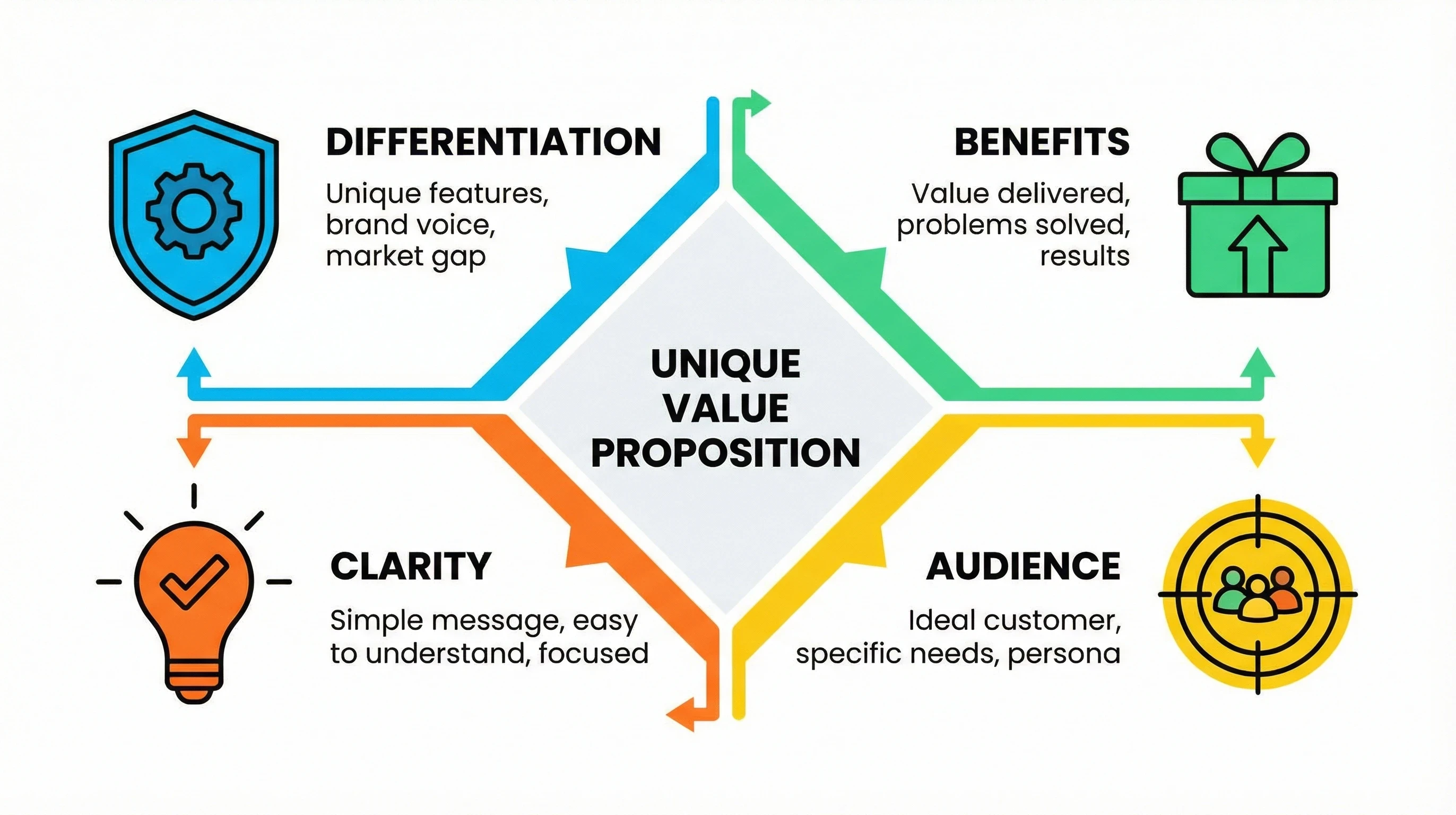
What Is a Unique Value Proposition?
A value proposition is basically the answer to what makes you or your business different in a way people actually care about. It explains the value you bring and why someone should pick you over competitors. Great value propositions don’t use fancy buzzwords or wild promises. They get right to the point with language that makes sense to real people.
Crafting a unique value proposition isn’t something only big brands do. I’ve seen local coffee shops, solo freelancers, and tech start ups all use strong value propositions to pull in loyal customers. Whether you’re selling handmade soap or offering cloud software, a sharp statement of value makes things clearer for everyone involved.
Why Your Unique Value Proposition Really Matters
Your value proposition is more than just a slogan. It’s the first impression someone gets about your brand, and sometimes the only shot you have to grab interest. A good value proposition can:
- Clarify what you’re offering: Visitors and potential customers instantly get what you do.
- Differentiate you from competitors: You aren’t just another option. You’re the smart pick for their needs.
- Guide your messaging: When your value is clear, writing emails, landing pages, and ads gets a whole lot easier.
- Build trust: When your promise matches what you deliver, people are far more likely to stick around.
Speaking in plain terms is critical. Vague buzzwords or empty claims like “We innovate solutions” are practically invisible. I recommend using details and facts, and focusing on concrete outcomes. For example, if you cut client costs by 20 percent, say it. If your app takes the hassle out of meal planning, spell out exactly how.
Step By Step: Crafting Your Unique Value Proposition
I use a straightforward method whenever I help someone define their unique value proposition. Even if you’re starting from scratch, these steps will set you on the right path:
- Know your audience
Who are you hoping to reach? Think about real people, not just demographic data. Get specific about their problems, wants, and what annoys them about other options. - Pinpoint what only you offer
What’s your secret sauce? This could be a hard skill, a brand story, a super useful feature, or the way you deliver your service. Sometimes, your uniqueness is how you do it, not just what you do. - Focus on real benefits
People care more about outcomes than features. Check out what your product or service really does for your customers. Does it save them time, money, or stress? Will it help them look good to their boss? - Study the competition
Check out your main competitors; look not just in your industry but at anyone your customer might consider instead of you. Compare promises, note the overlap, and identify the gaps you can fill. - Write it out, then trim it down
Start big, then simplify it. Aim for a sentence or two that passes the “so what?” test. If someone can’t tell how you’re different, keep tweaking it.
You might need to revisit your value proposition each time your business has a significant change, or when you launch a new product or service. This habit helps keep your messaging sharp and your offering relevant, which is key to long term success.
Common Mistakes When Building a Value Proposition
Trying to craft a unique value proposition has a few possible roadblocks. I’ve noticed a few classic traps:
- Making things too generic: Stuff like “high quality” or “best service” is practically invisible these days.
- Being too complicated: Long explanations lose readers fast. Your value proposition should be easy to say out loud.
- Forgetting about the customer: It’s tempting to focus on what you like, but the real trick is talking about what your customers actually want.
- Relying on features over outcomes: Listing things you offer is fine, but spelling out the benefits connects faster with people.
Another pitfall is using language that only industry insiders understand. Always write in a way that anyone, even someone new to your niche, can understand without guessing your meaning. If you’re uncertain, ask a friend outside your industry if your wording is clear or if it sounds confusing.
Examples of Value Propositions That Work Well
Here are a few value propositions I’ve come across that get the job done without any fluff:
- Netflix: “Watch TV Shows & Movies Anytime, Anywhere” (Clear benefit, no jargon, straight to the point.)
- Evernote: “Your notes. Organized. Effortless.” (Explains the main outcome in a way anyone can understand.)
- Dollar Shave Club: “A Great Shave for a Few Bucks a Month. No Commitment.” (Benefit plus difference on price and approachability.)
If you’re stuck, compare companies in your space and see which value propositions you remember 10 minutes later. The best ones are clear, specific, and memorable, even if you’re only half paying attention.
Another way to get inspired is to check out value propositions on websites like Slack, Spotify, or Shopify. Notice how they use simple words, step away from techie speak, and focus on what makes life better for their users.
Try This: Building Your Own Value Proposition
Ready to try this for yourself? Grab a notebook and try this quick framework I use all the time:
- Fill in the blanks: We help [who?] do [what?] by [how?]
- Add detail to answer “so what?” with benefits that matter.
- Challenge yourself to get it under 20 words, if you can.
- Ask someone outside your business if they get it right away. If not, it could probably use a little more fine tuning.
If you’re looking for more super detailed ideas, ConversionXL has a great guide to value proposition formulas that’s worth checking out. I’ve used resources like theirs to get extra clarity when I hit a wall.
Big Impact: Where to Use Your Value Proposition
Once your value proposition is set, you’ll get the most out of it by putting it where people will actually see it.
- Your website landing page: Right at the top or near your main headline is usually the best spot.
- Social media bios: Shorten it for platforms, but keep the core message.
- Email signatures: It’s a quick way to remind people what you’re about.
- Sales pitches and proposals: Open with the value and you save people time in meetings.
Consistency is super important here. Using the same value proposition across all these spots helps reinforce your brand, which means more people remember you for the right reasons. If you consistently talk about your unique value, it becomes easier for customers to refer you to others because your main message stays top of mind.
Practical Tips for Keeping Your Value Proposition Fresh
Business stuff can move quick, so I like to revisit value propositions every six months or so. Here’s how I keep things fresh:
- Listen to customer feedback and reviews. If customers are repeating certain phrases, work them into your messaging.
- Watch for market changes. If the competition switches focus, updating your proposition keeps you ahead.
- Test on your audience. A little A B testing with email headlines or landing pages lets you see what clicks best.
Additionally, keep an eye out for new trends that could affect your value proposition. For example, if a new popular technology or social movement reshapes customer expectations, you may want to adjust your messaging. By staying sharp and checking in regularly with your team or customers, you help keep your business relevant, memorable, and clear in a changing world.
Frequently Asked Questions About Value Propositions
What’s the difference between a tagline and a value proposition?
A tagline is usually just a catchy phrase. A value proposition explains the key benefit you bring and backs it up with detail. They can work together, but aren’t the same thing.
How detailed should my value proposition be?
I suggest keeping it short, one or two sentences, so it’s easy to remember. You can always provide more details further down on your site or in a presentation.
Can my value proposition change over time?
Absolutely. As your business and customers grow, your value proposition can too. Regular check ins make sure it still fits who you are and what people want.
Should my value proposition be the same everywhere?
It helps to keep the core idea consistent, but you might tweak the wording to fit specific audiences or channels, like your LinkedIn profile compared to your homepage.

Wrapping Up: Why Crafting A Unique Value Proposition Pays Off
A clear and unique value proposition isn’t just a marketing box to check. It’s like having a compass for everything you share and create. This keeps your communication strong and makes customer experiences smoother. Whether you’re launching a product or levelling up your freelance side hustle, starting with a sharp value proposition can save a lot of wasted effort down the road. Take the time to nail down your unique value, and you’ll see how much easier it makes every part of your business.
Many Thanks!
Many thanks for reading this article on Crafting A Unique Value Proposition. I really do hope that you have found it helpful and can implement it into your business activities. If you would like some further reading, take a look at my article titled Setting SMART Goals For Your Online Business.
If you are serious about starting an online business, take a look at how Wealthy Affiliate can help you to start and grow long term. Just click the banner above to go to the homepage. You can have a look around and see what’s on offer. Or, you can read my full, comprehensive Wealthy Affiliate Review here.
If you have any questions at all or just need some advice, please leave me a message in the comments section below. I will always reply to every message.
All the best!
Eamon